Salone Raritas 2026: The Definitive Field Guide to Milan's New Collectible-Design Platform
Salone Raritas is the most structurally significant new addition inside Salone del Mobile 2026: a deliberately small, curated platform of around 25 exhibitors that brings collectible design - limited editions, unique pieces, design antiques, and high-end craftsmanship - into the core trade-fair ecosystem. It runs 21-26 April 2026 in Hall/Pavilion 9, Fiera Milano Rho.
At a Glance
| Detail | Official information |
|---|---|
| Dates | 21-26 April 2026 |
| Location | Fiera Milano Rho, Hall/Pavilion 9 |
| Opening hours | Visitors 09:30-18:30 - Press 08:30-18:30 - Exhibitors 08:30-19:00 |
| Trade entry | Trade 21-26 Apr - Students 24-26 Apr - General public 25-26 Apr |
| Scale | Approx. 25 exhibitors (restricted selection) |
What Raritas Is and Why It Exists Now
What it covers
Raritas is a new exhibition and curatorial pathway within the 64th edition of Salone del Mobile, dedicated to collectible design, limited editions, unique pieces, design antiques, high-end creative craftsmanship, and "outsider pieces" - objects at the boundary between art and design that escape traditional classifications.
Two details matter more than the marketing nouns:
- The selection is intentionally restricted - around 25 exhibitors - so the experience is designed to be readable in one focused visit rather than through marathon wandering.
- Raritas is positioned as a bridge between special production and the B2B contemporary design market: a place where the cultural value of pieces can dialogue with the scale of large commissions in hospitality, residential real estate, and experiential retail.
Why it debuts now
The reasoning is consistent: the market has moved toward uniqueness, identity, and narrative as value indicators, particularly in high-end residential, hospitality and retail developments. Rare pieces are framed as tools for differentiation - a lever for identity-building, not just decoration.
There is a tension that makes Raritas editorially interesting: collectible design is "trending," but trend cycles can push scarcity markets toward overproduction. The answer is curation as governance: a constrained roster, a cohesive spatial framework, and a target audience rooted in professional specification rather than pure spectacle.
Curated by Annalisa Rosso, Staged by Formafantasma
The curatorial concept
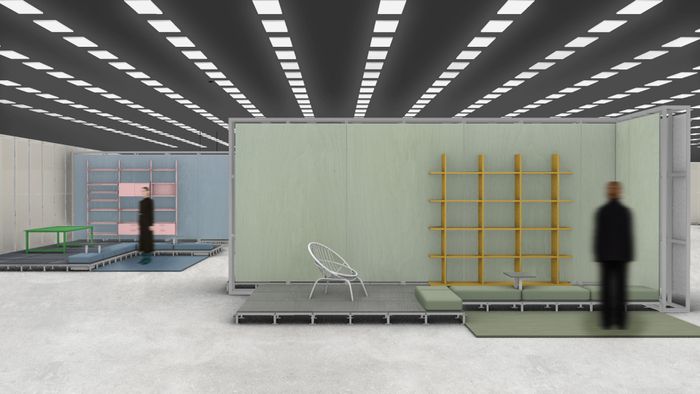
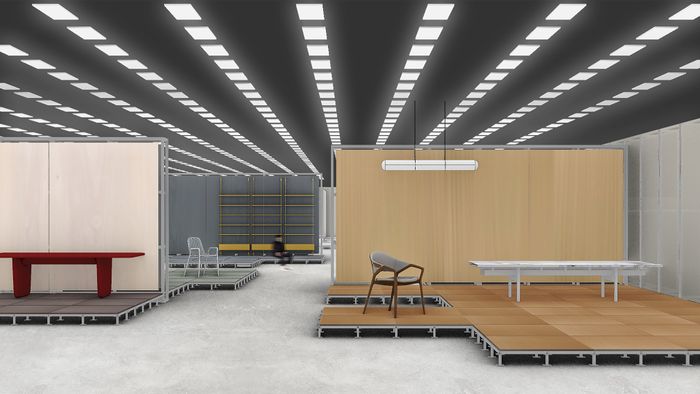
Raritas is curated by Annalisa Rosso and staged by Formafantasma as a "lantern"-like environment intended to make value readable without drowning objects in trade-fair noise.
Official releases describe the space as a large lantern - porous, materially bold, timed around recognisability and rhythm, with a predefined palette that allows calibrated customisation without collapsing into visual chaos. The design goal is a hybrid between a trade-fair booth and a museum-gallery display: making objects readable, memorable, and professionally translatable into interiors and projects.
Why the spatial design matters
Collectible design can fail in two opposite ways: (1) it becomes a white-cube spectacle with no market legibility, or (2) it becomes a sales floor with no cultural coherence. Raritas spatial concept is designed to hold those tensions in balance, so that rare objects remain both credible and specifiable.
Who Raritas Is For
Architects and interior designers
Rare works serve as "identity anchors" - the object around which a room narrative, palette, and emotional register are built. Raritas gives A&D professionals a concentrated, curated shortlist of pieces that can define a project rather than furnish it.
Developers and hospitality operators
Limited-edition work as a positioning lever and press/social fuel for strategic differentiation. Official communications repeatedly link Raritas to the need to define the identity of interiors in competitive real estate and hospitality markets.
Collectors
Access to galleries and makers in a new professional context, plus a signal of which practices the wider market is lifting into high-budget commissions. For collectors the interest is twofold: access and signal.
Official materials describe Raritas as an "authoritative point of reference" aimed at connecting galleries and designers with "international decision makers" in a selective, high-quality platform. That signals a hybrid market posture: not purely collector-to-collector, but collector-to-project.
Economics: Limited Editions vs Product Launches
Two different supply logics
Industrial launches (traditional fair territory) optimise for catalogues, repeatability, distribution, and after-sales infrastructure. Raritas is explicitly about special and limited editions and unique pieces, where value is tied to scarcity, authorship, labour intensity, and cultural positioning.
What this means for buyers and specifiers
- Lead times can be longer and less standardised, especially for one-off or workshop-led pieces.
- Documentation becomes central to value: provenance, editioning, and condition reports (for antiques).
- Pricing logic tends to behave more like an art market than a catalogue market - negotiability, deposits, staged payments, and shipping/installation complexity may apply.
The most useful way to approach Raritas is not "Which pieces are pretty?" but "Which pieces have usable, specifiable value for my project or collection?"
Who Is Showing: Names and Projects to Track
Confirmed exhibitors and collaborations
The full exhibitor roster is not published in a single public list; the official page states "approximately 25 exhibitors." That said, Salone has publicly named several participants:
- Nilufar, COLLECTIONAL, Mouromtsev Design Editions, Mercado Moderno, Bianco67, and Brun Fine Art are among the exhibitor examples cited by Salone.
- Sabine Marcelis has a special project within Raritas (confirm details via programme materials on site).
- Parasite 2.0 in collaboration with Bianco67, previewed by Domus.
- Draga & Aurel in collaboration with Salviati (Murano glassworks) presents "Affinity in Light," an experimental process-focused collection of lamps.
- Job Smeets participates through a project connected to Mouromtsev Design Editions, with curatorial involvement from Maria Cristina Didero.
What to look for beyond names
Track editorial signals of seriousness: closed editions, documented fabrication, repair pathways, and a clear bridge to real projects - not just "collectability" as Instagram theatre.
Raritas Label-Reading Checklist
What to verify at each stand
Because Raritas merges galleries, antique dealers, excellence manufacturers and limited-edition producers, label conventions may vary. Save this checklist for your visit:
| What to check | Why it matters | Ask for if missing |
|---|---|---|
| Designer/author, title, year | Attribution and context | Written spec sheet or COA draft |
| Material description (not just "marble") | Durability, maintenance, craft truth | Exact material IDs, finish, treatment notes |
| Edition statement (e.g., 1/8; AP; unique) | Controls scarcity and resale logic | Edition size, AP count, whether edition is closed |
| Provenance (antiques) | Authenticity and value | Prior ownership, restoration notes, condition report |
| Fabrication method and workshop | Labour intensity and repairability | Workshop name, process notes, limitations |
| Lead time and shipping terms | Timeline reality | Incoterms, packing, insurance, delivery window |
Two high-impact questions for professionals
- "If this goes into a hospitality project, what is your maintenance and repair pathway?"
- "What is the story you want this object to build, and what evidence supports it?"
How to Visit Raritas in One Fair Day
Recommended schedule
Treat Raritas as a two-hour museum visit with a purchasing brief, not as "one more hall." Plan to arrive early, go before cognitive fatigue sets in, and finish with a debrief: which pieces are project-appropriate, which are collection-appropriate, and which are beautiful but unworkable.
- 08:45 - Arrive at Fiera gates with security buffer
- 09:30-11:20 - Raritas (Hall 9): 6-10 stops max
- 11:20-11:40 - Debrief notes and shortlist photos (with credits)
- 11:40-12:30 - Adjacent fair priority: one hall only
- 12:30-13:30 - Lunch and scheduling follow-up calls/emails
- 13:30-16:30 - Two targeted stand revisits and spec collection
- 16:30-18:00 - Talks/meetings or exit early to avoid peak rush
If you are visiting on the public weekend (25-26 Apr)
Compress Raritas to 75-90 minutes, go early, prioritise documentation over browsing - ask for spec sheets, photograph labels, book follow-ups.
If you are not attending in person
Start with the official Raritas page, cross-check named exhibitors in Salone official articles and reputable press, then follow exhibitor announcements on Salone social channels.
Mini Glossary for Collectors and A&D Professionals
- Limited edition: A work produced in a fixed number of examples (e.g., 1/8). Edition size and whether it is closed materially affect value - verify exhibitor-specifically.
- Unique piece: A one-off object or prototype. Verify whether "unique" means singular or customised variant.
- Design antique: Historic collectible design (often 20th-century icons). Condition and provenance are decisive - ask for condition reports and restoration history.
- Provenance: The documented history of ownership and movement of an object. Vital for antiques; useful for contemporary pieces when exhibition history matters.
- Certificate of Authenticity (COA): Confirms author, editioning, date, and sometimes fabrication. Not standardised at Raritas - request it.
- Primary vs secondary market: Primary is first sale from creator/gallery; secondary is resale. Raritas includes both logics - clarify which before negotiating.
What Raritas Changes Going Forward
Two trajectories are visible in official framing. First, Raritas is presented as institution-building - the fair positions it as a curated system where rarity becomes a shared language rather than an exception. Second, it sits alongside the broader 2026 push toward integrated itineraries and a contract-focused pathway maturing in 2027, suggesting Salone is re-architecting itself around ecosystems, not just product halls.
If Raritas succeeds, expect two measurable outcomes: more galleries and special-production brands treating the fairgrounds as a viable market (not only the city), and a higher editorial standard for object documentation - because specifiers and collectors will demand it in this high-visibility context.