Quaranta5 by FANTONI
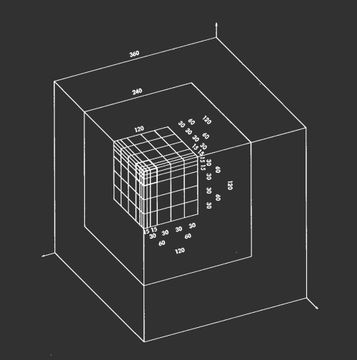

Key details
| Brand | FANTONI |
|---|---|
| Category | Desk |
Specifications
| Brand | FANTONI |
|---|---|
| Category | Desk |
More Desk by FANTONI








Recently Viewed Products
CIRCUIT : 2 PENDANT VERTICAL

Apparatus Studio > Ceiling lamp
This modern pendant light features a sleek, sculptural design with a brushed metal finish, perfect for adding an elegant touch to dining spaces. Its diffused light creates a warm ambiance, making it ideal for high-end interiors seeking a sophisticated lighting solution.
SIGNAL X : PENDANT

Apparatus Studio > Ceiling lamp
This modern pendant light features a sculptural design with a brushed metallic finish and elegant glass elements, perfect for adding sophistication to dining spaces. Its single light source casts a warm, downward glow, enhancing the ambiance of any interior setting.
TALISMAN : 1 PENDANT

Apparatus Studio > Ceiling lamp
This sculptural pendant light features a series of elegantly suspended globes, crafted from brushed metal and glass, offering a refined touch to dining spaces. Its multi-light design provides a warm, downward illumination, perfect for creating an inviting atmosphere in high-end interiors.
BROOKLYN 75 - Rectangular porcelain stoneware table

Atlas Concorde > Table
The Brooklyn 75 is a sophisticated rectangular dining table featuring a porcelain stoneware top, designed with a modern aesthetic that combines clean lines and softer angles for a refined elegance. Crafted from high-quality materials, this table offers durability and longevity, ensuring it remains a centerpiece of any contemporary living space. Designed to complement trendy environments, the Brooklyn 75's minimalist style is ideal for both formal dining rooms and casual kitchen settings. Its sleek design features include smooth edges and a uniform surface that not only enhance its aesthetic appeal but also make cleaning effortless. The porcelain stoneware top is resistant to stains, scratches, and heat, making it an excellent choice for everyday use. Brooklyn 75's construction ensures stability and durability, with robust legs and a sturdy base designed to support the weight of heavy furniture or large gatherings without compromising its aesthetic appeal. This table is suitable for both indoor and outdoor settings, providing versatility in various environments. For maintenance, regular cleaning with mild soap and water is recommended to keep the porcelain stoneware top looking pristine. Avoid using harsh chemicals or abrasive materials that could damage the surface. Regularly inspecting the legs and base can help prevent any potential issues related to wear and tear. The Brooklyn 75 from Atlas Concorde offers a blend of modern design with practical functionality, making it an ideal choice for those seeking a stylish yet reliable dining table solution.
INCONTRO 75 - Rectangular porcelain stoneware table

Atlas Concorde > Table
The Incontro 75 is a meticulously crafted rectangular table featuring a porcelain stoneware top that exudes elegance and durability. Crafted with precision, this table combines essential shapes designed to seamlessly integrate into various interior design aesthetics, creating an atmosphere of lightness and simplicity in any space. Constructed from high-quality porcelain stoneware, the tabletop boasts exceptional resistance to heat, stains, and wear, ensuring it remains pristine for years to come. The robust yet elegant construction is complemented by a sleek, minimalist design that complements both contemporary and traditional interiors effortlessly. Key features of this table include its rectangular shape, which allows for versatile placement in any room, while the porcelain stoneware top provides an added layer of sophistication. The Incontro 75's modern style makes it suitable for use as a dining table, side table, or even as part of a living room setup, enhancing both functionality and aesthetic appeal. For maintenance, simply wipe down with a damp cloth when necessary to keep the porcelain stoneware top in pristine condition. Avoid using harsh chemicals that could damage the surface, and ensure it is protected from direct heat sources like hot pots or lamps to prevent any potential discoloration or cracking. The Incontro 75 table by Atlas Concorde offers not only a functional piece of furniture but also an opportunity for homeowners to add a touch of elegance and timeless design to their living spaces.

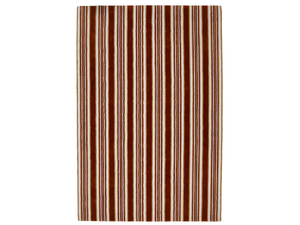


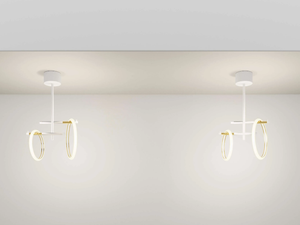
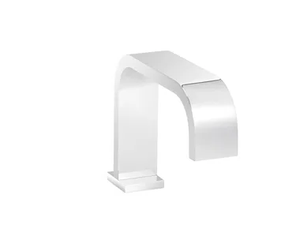
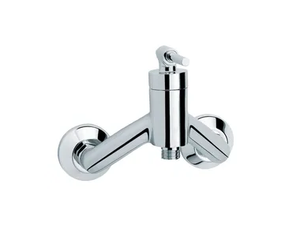
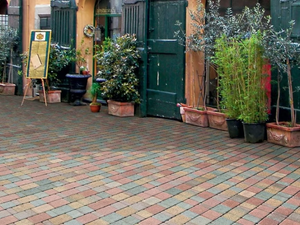
White Swedish Flatweave Wool Rug

Abchome > Rug
A Swedish take on Moroccan diamond motifs, this Scandinavian Style Kilim Rug - 2'10" x 5'0" features a textured high-low pile handwoven from durable wool while remaining soft underfoot. A beautiful addition to the minimalist or mid-century modern home, this traditional kilim rug is symmetrical and well-balanced for a variety of spaces. Kilim rugs are traditional flatwoven foundations that are cherished for their versatility and lightweight nature.
3" LED Dual Adjustable Downlight
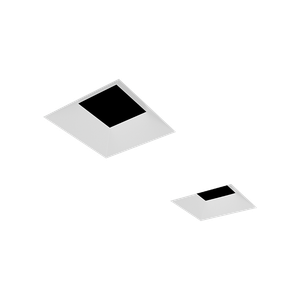
Visual Comfort > Ceiling lamp
element-3-led-dual-adjustable-downlight
PB MICRO Basin - 60A
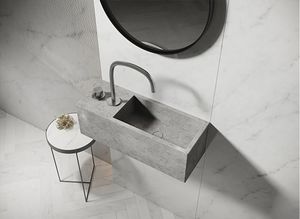
COCOON > Washbasin
Designed by Piet Boon for small spaces, the Micro Washbasin is available in a wide selection of natural stone or solid surface materials. It includes a drain in the same material and is available in two versions, with the tap position on either the left or right side.
Satellite
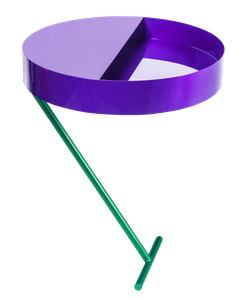
Altreforme > Table
Just like a real satellite, this little table will gravitate in your house granting a galactic style and charme!
Guanto
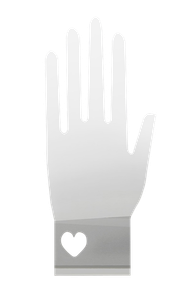
Altreforme > Styling
Funny expression of elegance and refinement, the glove becomes a mirror to cheer and brighten the walls of every room.
Nitya

Altreforme > Styling
Nitya is, as its name says, an eternal mirror. A perfectly balanced shape and a timeless design; it is the focal point of every space. Bindoo is a collection of modular mirrors enclosed in graphic compositions of circles, triangles and squares with different color palettes inspired by traditional Indian clothing and made of pure aluminum. This artistic collection originates from Indian philosophy: Bindu, Sanskrit word meaning "point", symbolizes the source of all creation. The customer is offered endless possibilities of combination and coloring.
Kama

Altreforme > Styling
Kama, Sanskrit word meaning "love" is the triangle version of the Bindoo collection. Elegant and contemporary, it adds shine, style and color to any environment. Bindoo is a collection of modular mirrors enclosed in graphic compositions of circles, triangles and squares with different color palettes inspired by traditional Indian clothing and made of pure aluminum. This artistic collection originates from Indian philosophy: Bindu, Sanskrit word meaning "point", symbolizes the source of all creation. The customer is offered endless possibilities of combination and coloring.
Sissi
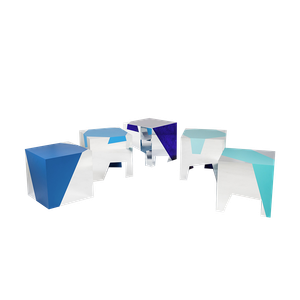
Altreforme > Table
Sissi is a made in Italy furnishing jewel, versatile and captivating, to be used as a single seat, as a table, as a totemic sculpture.. choose yourselves.The colors of the sea enhance the reflective finish, making them one with the nature in which they are placed.Sissi Blu di Prussia edition is part of a limited collection of only 10 pieces.Product purchasable only in totemic version.
Coco
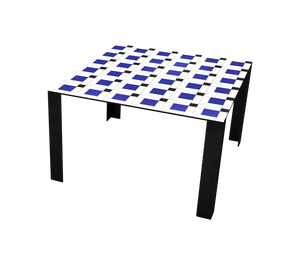
Altreforme > Table
Tables and console, tribute to Coco Chanel and to her maison in rue de Cambon.
Star

Altreforme > Chair
“Where to, Miss?... To the stars!” (Titanic, 1997)Now it will be possible thanks to star seat with glitter aim coming directly from altreforme galaxy.
Mariù
Altreforme > Console
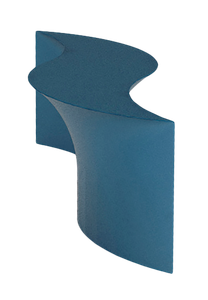
mariu' is a console table whose sizes are stately and shapes surprising.mariu' is feminine, soft and elegant.mariu' is a woman of the past, who shy hides her strong personality, to reveal it later on and suddenly surprise you.mariu' is well-balanced, so that supports its wide figure with harmony on only one S-shaped line of only one cm thickness; it can surprise you from every point of view and is extraordinarily irresistible.
Aava 02

Arper > Chair
Arper Aava 02: a collection of recycled plastic chairs. Designed to fit harmoniously into both indoor and outdoor environments. Discover it on arper.com
Roopa
Arper > Chair
Explore the Arper Roopa collection: elegant high gloss coffee tables for living rooms, the perfect piece of furniture for a modern home. Find out more.
Catifa Carta
Arper > Chair
Enter a new era of sustainable design with Arper's Catifa Carta, a chair designed for both comfort and style with an innovative carbon negative material.


Face à face - ACER5060FM06_

Agape > Washbasin
Face à Face è una famiglia di lavabi realizzati con lastre di marmo. I lavabi sono realizzati in marmo bianco di Carrara, marmo grigio Carnico o marm
Similar Desk for Commercial Interiors
Ascoli Desk Matt Nickel

Astro > Desk
This modern table lamp features a sleek, brushed metal finish with an adjustable cylindrical shade, perfect for illuminating workspaces with style and precision. Its minimalist design and compact size make it an ideal choice for contemporary office environments.
Lunat

Kartell > Desk
The LUNAT desk, designed by Patricia Urquiola, creates the ideal solution for a home smart working station as well as a desk in a hotel room. The powder-coated legs grow slender up to the bean-shaped top; the top is available in flamed walnut finish.
PK52A Student Desk

Carl Hansen > Desk
Poul Kjærholm created the PK52A Student Desk by bringing wood and steel together in a clean, light construction. With its pared-down expression the desk is a perfect example of Kjærholm’s great contribution to Danish design.
CH110 Desk

Carl Hansen > Desk
Hans J. Wegner’s CH110 desk stands out in many ways from his usual style of solid-wood furniture. Created in 1970, it was part of an exclusive office concept. The series features some of Wegner’s most distinctive steel-framed furniture.
pp571

Pp Mobel > Desk
Hans J. Wegner designed the exquisite pp571 Architect’s Desk in 1953 as a match to the Round Chair. Later in 1955 he designed the Swivel Chair, completing a line of exclusive masterpieces for the CEO’s office. The desk marks the beginning of Wegner’s work on combining sharp steel and sculptural solid wood in elegant and well-balanced solutions.
pp305

Pp Mobel > Desk
This is classic Danish craftsmanship offering simple and modest functionality in solid wood. As a counter experiment, this desk pays homage to pure, traditional and exquisite woodwork. Although the thorough and dedicated attention of a skilled cabinetmaker is required in executing the work on this desk, the job can be done with relatively simple tools.
Journal Desk White

Normann Copenhagen > Desk
Laminated tabletop with oak edge, powder coated steel legs, steel drawer, painted in same color as tabletop and legs. Silicone rosette at hole for power-cords.
Home office Penrose Desk

Tonelli Design > Desk
Penrose desk, designer home office desk, was created by Isao Hosoe together with Lucia Fontana and Masaya Hashimoto. It represents the aesthetic and functional metaphor of man’s challenge to exceed nature and its equilibria through the use of glass, and results as the ideal furnishing complement for the studio. The asymmetric structure in transparent glass, also available in extra clear finish, is able to create a perfect balance between the finely cut glass slabs.
Home office Bacco

Tonelli Design > Desk
The glass table Bacco is composed of a top available in transparent, extra clear or smoked glass and of a base made of two mirroring glass supports that rest on the floor. Its clean lines are particularly suited for minimalistic decors because they do not burden the environment. The transparency makes the room brighter and creates a broader effect. Perfect for luxury studios and offices, dining rooms and lounges, the glass table Bacco can be ordered in different sizes according to needs. The glass of this designer table is resistant and tempered, which makes it also suitable for working areas and dining rooms.
Home office Marcell

Tonelli Design > Desk
Marcell, timeless design furniture, born from a project by Massimo Castagna, and is characterized by the essential and rigorous lines of glass combined with the warmth of wood, in a versatile piece of furniture in all its forms. The extra clear or smoked glass structure was born as a desk, but thanks to the modularity of its components, it can also be used as an entrance console and if equipped with drawers or a mirror, also as a dressing table for the sleeping area. The containers, available in Eucalipto, Siberian Ash or Natural Oak wood, have the additional option of hinged doors on the left or the possibility of inserting a set of three drawers in a matching finish. To complete the offer, the mirror from the same collection with a polished chrome base.
The Living Workspace

Occony > Desk
Occony introduces The Living Workspace, our latest collaboration with designer Robert Bronwasser. The Living Workspace is a modern workspace concept, inspired by nature, with organic shapes and smart solutions that promote functionality, connection and well-being, even in the most business-like environments.The Living Workspace is a modular system that is customizable in size, direction, composition and color & finishes. It acts as an innovative replacement for conventional workplaces and promotes innovation, social interaction, and various forms of collaboration. As well, it offers the opportunity to create quiet, ergonomic workplaces for individual work.Our workplaces are acoustically optimized, electrically height-adjustable, and comply with the NPR 1813 and NEN 527 guidelines for sit-stand workplaces.
TMNL front workstation

Gispen > Desk
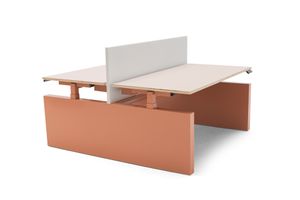
Gispen TMNL is a modular desk and (conference) table range, specially designed for intensive use. Ideal for dynamic organisations that place high demands on multifunctional office design, with an eye for sustainability. The frame, top and base are easy to assemble and the desired height is easy to adjust.
TMNL four-pack workstation
Gispen > Desk
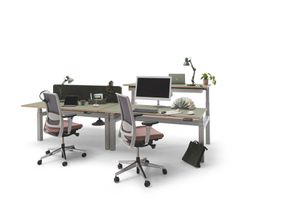
Gispen TMNL is a modular desk and (conference) table range, specially designed for intensive use. Ideal for dynamic organisations that place high demands on multifunctional office design, with an eye for sustainability. The frame, top and base are easy to assemble and the desired height is easy to adjust.
TMNL doc workstation

Gispen > Desk
Gispen TMNL is a modular desk and (conference) table range, specially designed for intensive use. Ideal for dynamic organisations that place high demands on multifunctional office design, with an eye for sustainability. The frame, top and base are easy to assemble and the desired height is easy to adjust.
IC solo workstation
Gispen > Desk
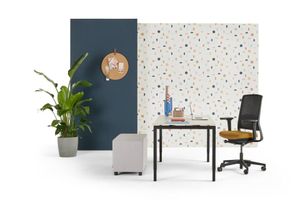
This design is so powerful because all unnecessary details have been left out. IC is a minimalist desk and conference table collection with slender open frames and a floating top, keeping its surroundings visually open. Its sleek design makes IC suitable for any environment. There are different tabletop sizes to choose from, which makes this collection very multi-functional. What is a desk today, can become a conference table tomorrow.
IC solo workstation

Gispen > Desk
Gispen IC is a minimalist desk and conference table range with slender, open frames and suspended tops. The design creates the appearance of an open environment. Generous surface dimensions make the tables multifunctional. Extra-large table leg bridges provide maximum legroom while also reducing the use of materials.
Home office desk sit-stand (electric)

Gispen > Desk
This sleek and sustainable desk will ensure that you keep your body in motion. The electric height-adjustment system makes it easy to alternate between a seated and a standing position. You can set the tabletop to your preferred height with the push of a button. Ideal when you want to regularly alternate between postures, or when more than one person makes use of the home office desk. The desk meets the highest of ergonomic requirements and will suit any home office environment. The height of the tabletop can be adjusted to a quarter of an inch via the screw adjustment. When combined with an ergonomic office chair, you will have a fully-fledged ergonomic and comfortable home office space.
mathieu

Poliform > Desk
Mathieu is a contemporary desk characterised by a slender silhouette and graceful contours. The top, with a wood frame and leather insert, traces subtle curves that soften the strong lines of the painted metal structure. The optional accessories – the small drawer under the top and the mirror – are elegant and discreet, making it a perfect complement for bedroom spaces.
home hotel

Poliform > Desk
Elegance and versatility are the common elements of the Home Hotel collection, which reinterprets contemporary living spaces in a lifestyle-based approach. The desk, solid and light, is available with or without a drawer and leather top.
concorde

Poliform > Desk
The light and essential shapes of the Concorde table are reinterpreted in the form of a writing desk, an essential component to create a dedicated home study area. The materials have been carefully selected, including solid wood and sophisticated finishes. Concorde is available with or without a drawer and leather top.
Eames Desk Unit EDU

Vitra > Desk
The Eames Desk Unit (EDU) was constructed by Charles and Ray Eames in accordance with the principles of industrial production. The panels function as a modesty shield and partially enclose the two storage compartments. The desk is height-adjustable to accommodate uneven floors.
Home Desk

Vitra > Desk
High-quality materials emphasise the graceful refinement of the Home Desk by George Nelson, originally designed in 1958 as a lady's writing table. Today the compact desk tends to be used in home offices, where it adds an appealing decorative accent with its multicoloured compartments.
CPH Table CPH 190 Desk

Hay > Desk
Sharing the same angled legs as the rest of the series the tabletop of the Moulded Plywood Desk CPH190 features a split at the back of the table creating a useful upright backrest for supporting notes and open books while the remainder serves as workspace. This has the dual benefit of making the desk more compact at the same time it increases functionality. Ideal for using in a home office or in a work environment it is crafted in oak with a clear lacquer.
D.847.1

Molteni > Desk
More than 70 years after its original design the D.847.1 console table is reborn thanks to the Heritage Collection reissue project by Molteni&C in collaboration with the Gio Ponti Archives.
Scriba

Molteni > Desk
A desk with very clean lines and a decoratively perforated top support element that conveys a sense of lightness. Wood surfaces a practical lateral drawer a clever book support element in painted sheet metal and a side pocket in hide leather complete the desk. The bookend support leans on the top and it can be positioned in the desired direction.
Add to Project
Create New Project
Your Projects
Loading projects...