Porcelain Cool Blue Side Plate by Heal's


Key details
| SKU | 1037808 |
|---|---|
| Brand | Heal's |
| Category | Furniture accessories |
Description
Specifications
| SKU | 1037808 |
|---|---|
| Brand | Heal's |
| Category | Furniture accessories |
More Furniture accessories by Heal's
Kyoto Sideboard

Heal's > Cabinet
A testament to the graceful style of Japanese design, the Kyoto uses supple walnut carpentry to create its light yet imposing form. Crafted in Italy by Riva 1920’s master wood workers, this spacious sideboard provides ample storage with slender drawers and twin cupboard units.
Brunel Stool

Heal's > Stool
Rob Scarlett’s hugely popular Brunel range sets industrial style against Mid-century Scandinavian design to create pieces made for modern living. Drawing inspiration from original 1950s designs by the likes of Robin Day and Clive Latimer, this agile stool has numerous applications as a dining seat, dressing stool or side table. Paying homage to the pioneering use of manufactured elements within modernist design, the bent tubular form of the legs provides an industrial feel that blends perfectly with urbane interiors.
Brunel Bench

Heal's > Bench
Rob Scarlett’s hugely popular Brunel range sets industrial style against Mid-century Scandinavian design to create pieces made for modern living. The simple profile of this long bench is thanks to the solid top crafted from American oak plus its sleek powder matching piping as well as a fabric strap to hold it in place. Paying homage to the pioneering use of manufactured elements within modernist design, the bent tubular form of the coated metal legs provides an industrial feel that blends perfectly with urbane interiors. Please note, both the Brunel Bench Cushion and Brunel Shelf for Bench are sold separately.
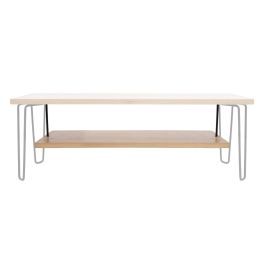
Brunel Shelf For Bench / Hallway Bench
Heal's > Styling
Rob Scarlett’s hugely popular Brunel range sets industrial style against Mid-century Scandinavian design to create pieces made for modern living. Drawing inspiration from original 1950s designs by the likes of Robin Day and Clive Latimer, this practical add-on shelf transforms seating into a functional storage unit and is designed specifically to fit the Brunel Bench (sold separately).
Brunel Coffee Table in Oak Light Wood

Heal's > Table
Rob Scarlett’s hugely popular Brunel range sets industrial style against Mid-century Scandinavian design to create pieces made for modern living. Drawing inspiration from original 1950s designs by the likes of Robin Day and Clive Latimer, this functional coffee table brings urban chic to a variety of spaces. Powder coated metal legs pay homage to pioneering modernist design, their bent tubular form providing an industrial feel that blends perfectly with urban interiors.
Brunel Shelf For Coffee Table

Heal's > Table
Rob Scarlett’s hugely popular Brunel range sets industrial style against mid-century Scandinavian design to create pieces made for modern living. Dynamic in its design, this functional add-on shelf provides another level of functionality and is designed specifically for the Brunel coffee table (sold separately).
Brunel Bench Cushion Smoke Grey Fabric

Heal's > Bench
Rob Scarlett’s hugely popular Brunel range sets industrial style against Mid-century Scandinavian design to create pieces made for modern living. Drawing inspiration from original 1950s designs by the likes of Robin Day and Clive Latimer, this practical cushion is designed specifically to fit the Brunel bench adding another layer of comfort.
Brunel Stool Cushion Smoke Grey Fabric

Heal's > Stool
Rob Scarlett’s hugely popular Brunel range sets industrial style against mid-century Scandinavian design to create pieces made for modern living. Designed to complement the Brunel Stool, this slate grey cushion offers that extra level of comfort.
Chanterelle Walnut Occasional Table

Heal's > Table
Offsetting a solid walnut log against slender chrome frame, the Chanterelle plays with texture and finish to create contrasts of organic and modern materials. The thin outline of this piece provides a wonderfully modern profile that works to great effect when placed within a minimal décor.
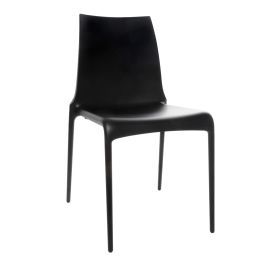
Petra Dining Chair Black
Heal's > Chair
The beautiful clean lines and free-flowing design of the Petra dining chair mirror Ligne Roset’s ethos of aesthetic and functional design. Using modern materials to create its continuous swooping form, this chair is stylish and practical making it perfect for large groups or guests.
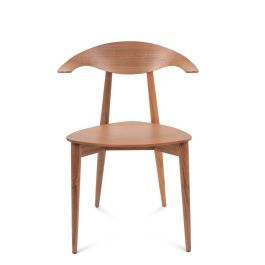
Manta Chair Walnut - Discontinued
Heal's > Chair
The curved walnut seat and back rest of the Manta Chair are both functional and sculptural in design, contrasting beautifully with the tapered walnut legs
Rythme Low Table Black

Heal's > Table
Lending a sense of weightlessness to the living space, the use of tubular steel and glass was very much in vogue throughout the mid-century period. Reviving this classic combination for modern interiors, Angie Anakis’ Rythme table replaces the sharp angles and geometric shapes of the original 1950s designs with a wiggly series of disjointed lines. Lending a sense of weightlessness to the living space, the use of tubular steel and glass was very much in vogue throughout the mid-century period. Reviving this classic combination for modern interiors, Angie Anakis’ Rythme table replaces the sharp angles and geometric shapes of the original 1950s designs with a wiggly series of disjointed lines.
Thot Occasional table in Walnut

Heal's > Table
Evoking the bent wood profiles of art nouveau furniture, the Thot has a wonderfully warped silhouette. Crafted from a choice of smooth walnut or textured black ash, this practical side table rests its round top on a set of curving legs that lead up to a slender supporting stem.
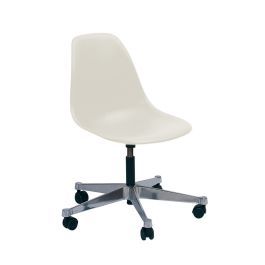
Eames PSCC Office Chair 04 White Polished
Heal's > Office Chair
Epitomising the playful, functionality of mid-century American design, the PSCC Chair by Charles and Ray Eames feels as fresh today as when it was first introduced over 60 years ago. Based on the original DSR design, this colourful, plastic moulded chair rests on a classic rotating office base and is available in a range of tones to brighten up the workspace.
Comback Rocking Chair Orangy Red/Wood

Heal's > Chair
Inspired by the classic silhouette of Windsor style rocking chairs, the Comback replaces wooden spindles with a colourful geometric pattern. Moulded from a durable thermoplastic, this award-winning Patricia Urquiola design sits on a curved oak frame that gives it’s a gentle rocking motion.
Comback Rocking Chair Yellow/Wood

Heal's > Chair
Inspired by the classic silhouette of Windsor style rocking chairs, the Comback replaces wooden spindles with a colourful geometric pattern. Moulded from a durable thermoplastic, this award-winning Patricia Urquiola design sits on a curved oak frame that gives it’s a gentle rocking motion.
Ulrik Stool Ash

Heal's > Stool
Made from solid ash, the Ulrick gives a new angle to the classically crafted stool. While its spindle footrest and hammered joints point towards traditional British furniture, the diagonal flick along the seat adds a contemporary touch to the silhouette.
Ulrik Bar Stool Ash

Heal's > Stool
Made from solid ash, the Ulrick gives a new angle to the classically crafted bar stool. While its spindle footrest and hammered joints point towards traditional British furniture, the diagonal flick along the seat adds a contemporary touch to the silhouette.
Eames Stools Model A Walnut

Heal's > Stool
In 1960 the Charles and Ray Eames were commissioned by Time Inc. to fit out three lobbies in the Rockefeller Centre in New York. Despite the immensity of the task, the pair paid meticulous detail to each facet of the design as evidenced by the beautiful turned wood detailing of this decorative walnut stool.
Eames Stools Model B Walnut
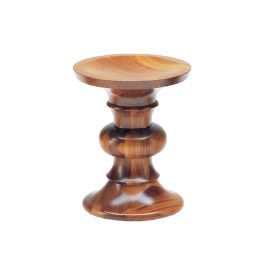
Heal's > Stool
In 1960 the Charles and Ray Eames were commissioned by Time Inc. to fit out three lobbies in the Rockefeller Centre in New York. Despite the immensity of the task, the pair paid meticulous detail to each facet of the design as evidenced by the beautiful turned wood detailing of this decorative walnut stool.
Eames Stools Model C Walnut
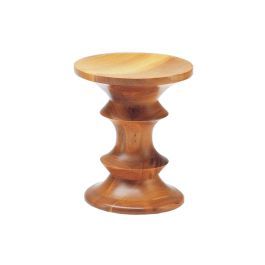
Heal's > Stool
In 1960 the Charles and Ray Eames were commissioned by Time Inc. to fit out three lobbies in the Rockefeller Centre in New York. Despite the immensity of the task, the pair paid meticulous detail to each facet of the design as evidenced by the beautiful turned wood detailing of this decorative walnut stool.
Cork Stool Model A

Heal's > Stool
While cork has been used for centuries to seal our favourite bottles of wine, it also works wonderfully throughout the home. Spotting the potential of this mouldable and durable material, Jasper Morrison has designed a collection of angular shaped Cork furnishings, their quirky shapes and natural texture making a great decorative stool or side table.
Cork Stool Model B

Heal's > Stool
While cork has been used for centuries to seal our favourite bottles of wine, it also works wonderfully throughout the home. Spotting the potential of this mouldable and durable material, Jasper Morrison has designed a collection of angular shaped Cork furnishings, their quirky shapes and natural texture making a great decorative stool or side table.
Cork Stool Model C

Heal's > Stool
While cork has been used for centuries to seal our favourite bottles of wine, it also works wonderfully throughout the home. Spotting the potential of this mouldable and durable material, Jasper Morrison has designed a collection of angular shaped Cork furnishings, their quirky shapes and natural texture making a great decorative stool or side table.
Eames Occasional Table LTR Black Chrome Base

Heal's > Table
A recurring theme of Charles and Ray Eames designs, bent wire steel offered endless new possibilities to designers of the 1950s. A mid-century classic, the LTR a double chromed base with laminate wood top to create a side table that works well within both domestic and commercial settings.
Plate Coffee Table Small

Heal's > Table
In keeping with Jasper Morrisson’s penchant for stripped back design, the Plate features a simple, supportive frame and elegantly carved top in Carrara Marble. The soft edges of this minimally styled design sit flush to create a serene silhouette, the perfect piece for a modern styled living space.
Rocher Dining Chair Black/Black Legs

Heal's > Chair
Rocher Dining Chair Pushing the limits of creativity, the Rocher dining chair blurs the line between a sculptural object and functional piece of furniture. An art form in itself, the Rocher’s angular shell seat makes the ideal decorative addition to your dining room.
Home Desk

Heal's > Desk
With such iconic designs as the Home desk, George Nelson helped invent the visual language of mid-century modernism. Now over five decades since it was first produced, Vitra bring the colourful, curvy workstation to a new audience.
Soixante 3 Stone Enamalled White Occasional Table

Heal's > Table
Following the Ligne Roset ethos of creative design with a purpose, the Soixante has a multitude of uses as a side table within the home, or outside as table for drinks or plates of hot food when outdoor entertaining.
Ashera Square Low Table

Heal's > Table
A striking coffee table with an 'eco-design' at its centre, the Ashera’s angular base is framed by contemporary glass. Formed from planks of solid European walnut, the geometric shape is both contrasted and highlighted by the transparent plate top, creating a completely new form from every angle.
Svelto Coffee Table Dead Matt Oak

Heal's > Table
A distinctive interplay of circular forms, the radical shape of the Svelto is reminiscent of Bauhaus modernism while its smooth finish and craft harks backs to classic Ercol Mid-century pieces. Made by hand, this sleek coffee table is a functional design feature for calm, contemporary interiors whether stripped back or softly furnished in neutral tones.
Masters Stool Medium Green Sage

Heal's > Stool
A thought provoking design, the Masters Stool Medium by Philippe Starck is a hybrid of three iconic chairs by legendary 20th century designers Arne Jacobsen, Eero Saarinen and Charles Eames. Exhibiting all the innovative construction and quirky features one expects from a Starck design, the branch like loops of this short bar stool are reminiscent of classic Thonet bentwood chairs.
Real Good Chair Copper

Heal's > Chair
Like origami for furniture, the Real Good’s unique flat-pack design relies on an ingenious folding metal frame. A stunning angular shape that is easy to assemble, this original chair from pioneering American designers Blu Dot gives new meaning to the concept of self-assembly furnishings.
Real Good Chair Black
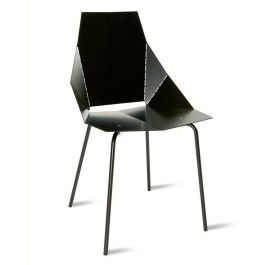
Heal's > Chair
Like origami for furniture, the Real Good’s unique flat-pack design relies on an ingenious folding metal frame. A stunning angular shape that is easy to assemble, this original chair from pioneering American designers Blu Dot gives new meaning to the concept of self-assembly furnishings.
Voltri Chair

Heal's > Chair
Elegant in its simplicity, the Voltri Chair is crafted entirely from solid walnut and joined without the use of metal fasteners. Its gently lowered back and widened seat evoke a refined silhouette, grounded in the principles of expressive woodworking and timeless design. Finished with oil and natural wax derived from pine extracts, this chair embodies Riva 1920’s commitment to heritage craftsmanship, simplicity, and enduring style.
Bree E Onda Table

Heal's > Table
Renowned for their beautiful carpentry, the Bree E Onda showcases Riva 1920’s ability to combine classic craft with striking modern design. Resting a solid walnut top onto a fluid curved metal base, this innovatively styled table is deceptively daring while also working well in more subtle interior schemes.
Arbori Dining Table 4-6 Seater Grey Wash Wild Oak

Heal's > Table
Contrasting contemporary style with rustic material, the Heal’s Arbori Dining Table is a striking mix of form and finish. Crafted from stained wild oak, the coarse pattern of grain and knots reflect the character of the majestic trees from which this table is cut.
Boss Executive Table 8-10 Seater Walnut

Heal's > Table
Hand carved on the coast of Lombardy, Italy, the Boss Executive celebrates the beauty of naturally sourced walnut. Thanks to the craftsmanship of Riva 1920s workshops, this robustly formed dining table is decorated with the organic patterns of wood grain, it’s thickly cut legs creating a geometric contrast thanks to exposed joinery along the surface.
Boss Executive Bench Walnut

Heal's > Bench
Hand carved on the coast of Lombardy, Italy, the Boss Executive celebrates the beauty of naturally sourced walnut. Thanks to the craftsmanship of Riva 1920s workshops, this robustly formed bench is decorated with the organic patterns of wood grain, it’s thickly cut legs creating a geometric contrast of exposed joinery along the surface.
Natura Table 4-6 Seater Oak

Heal's > Table
A slender silhouette of modern angled forms, the Natura’s blend of natural and industrial elements works wonderfully in opulently furnished settings. Contrasting beautifully crafted oak with an untreated iron base, the mix of dark and light tones, matt textures and patterned grain creates a distinctive look.
Recently Viewed Products
Archeologie Archeologie Grigio
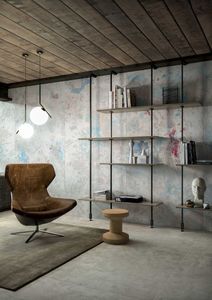
Florim > Wall Paint
The poetics of the wall. The forgotten wall. «A wall is like a book to be opened, a journey into the interior, revealing the experiences, memories, signs and symbols which this fragment of masonry has absorbed over the centuries.» Franco Guerzoni <p>It is difficult to resist the beauty of Franco Guerzoni's art, created by a rare harmony of feeling and intellect, poetry and mind. The artist expresses this through paintings which, although complex in structure, are joyous and sensual, with bright colours made, like those of the great masters of the past, from choice powdered ingredients. A painter with a technique rich in traditional skills, Guerzoni offers a version of modernity involving an intense fundamental relationship with his images and with space. In fact, the dialectic between painting and space, form and architecture, time and memory seems to be essential to his art. As his works specifically created for CEDIT clearly express, his creations achieve a perfect balance between the spatial dimension and intensely lyrical use of colour, which here becomes a soft, liquid form of matter, wandering across the surface of a dazzling lime-plaster white. White, metaphor for the clear light of day, as it was in the large, complex canvases exhibited in his personal exhibition at the 1990 Venice Biennale, is the background for forms of colour which renew the pleasure to be had from painting and the memory of an image glimpsed on the vast expanse of the surface. In the more recent works, these voluptuous shades are transformed into subtle shadows of colour that delicately caress the surface.</p> <p> </p> <p> All it takes is one wall, the only surviving wall of what was once a house, on which time has recorded its own, unavoidable passing, leaving traces of colour that is still vibrant, although faded in places, to allow the memory of the image to transpire, fragile and uncertain, in the physicality of the surface, to bear tangible witness to the existence of history, a mysterious visual memory, the extension into the present of the life of things. A memory of the past on a contemporary wall. The idea of memory is central to Franco Guerzoni's poetics: private, secret memory and the collective memory of the past. Fragmentary and indecipherable, perceived by the artist with the aid of what is left of the images, the fragment. A relic of a totality which can no longer be reconstructed but only imagined in poetic terms, the fragment, a fraction of an image conserved by time, guides the artist's fantastic archaeological journey in search of the world's memory. However, this journey takes him in the opposite direction to the archaeologist, for whom the fragment - fundamental because it reveals a trace of the past is the starting-point for an attempt to reconstruct history. For Guerzoni, the fragment is the endpoint of his work, the goal for which he strives in his investigation of the surface, as he digs deep down, leafing through the deposits of time and memory.</p> <p> </p> <p>Like the large pages of a book traced with fragile sketches, embryonic forms whose meaning has been lost in time, leaving only fleeting traces, uncertain, ambiguous, mysterious morphologies. It marks the start of a journey into the mind of the artist-archaeologist, an adventurous journey into the inextricable labyrinth of the mind, to unearth what is hidden, shuffling the cards in a perennial contamination of images, memory, signs and traces, in search of a meaning, which no sooner appears than it is lost, merging into time and once again becoming a dream, an imaginary journey into fantasy and wonder. And this is the case in the tryptic created for CEDIT, which placed a new challenge before the artist: to transfer "his" image, the remains and fragments of a forgotten wall onto a new material for him “stunning, large-sized ceramic slabs“ and a real wall, without this tautology betraying the painting's deep meaning, its fertile magic of lines and colours, from which the image is born. And the artist is fully aware of this. Guerzoni describes his art as a "gamble": a gamble that is a critical test, an act of daring, dangerous and risky. This is the challenge he sets himself. It is a challenge he easily overcomes, expressing himself on these large walls with a rediscovered pleasure in painting, no longer restrained and apparently absorbed by the dense, uneven coloured surface but set free and almost luxuriously accentuated. In his large, demanding works for CEDIT, Guerzoni achieves a new, consummate mode of painting, in which the architecture of the surfaces provides a poetic meeting-point between the two founding components of his style, the complex, well thought-out composition and the lyricism of colour.</p>
COMBI - Built-in acrylic bathtub
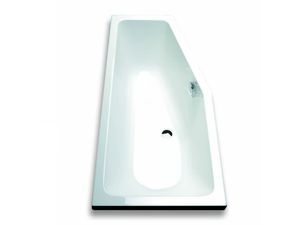
Hoesch > Bathtub
The Combi bathtub is a compact, economical solution designed for small bathrooms, offering both aesthetic appeal and practical benefits. Its unique design features a reduced length side that maximizes usable space within the bathroom while significantly lowering water consumption. This innovative product comes in two versions—right-hand and left-hand—ensuring compatibility with various bathroom layouts. Crafted from high-quality materials, including durable acrylic and reinforced fiberglass, Combi ensures durability and long-lasting performance. The bathtub's robust construction provides a stable and secure seating area, contributing to both comfort and safety during use. Its sleek modern design features clean lines and minimalistic styling, making it an ideal fit for contemporary bathroom aesthetics. Designed with functionality in mind, the Combi bathtub is suitable for various applications including residential bathrooms where space is limited or when seeking a cost-effective solution. It can also be integrated into small guest baths or as part of a minimalist renovation project. For optimal care and longevity, users are advised to follow these guidelines: clean the bathtub regularly with mild cleaning solutions; avoid harsh chemicals that may damage the surface; dry thoroughly after use to prevent water spots; and apply a protective sealant periodically to maintain its luster and extend its lifespan. By choosing Combi, homeowners can enjoy an efficient, stylish, and practical solution for their bathroom needs.
BOAT - Aluminium floor lamp

Mary& > Floor lamp
Embrace a bohemian aesthetic with this cozy floor lamp, featuring a unique cone-shaped shade crafted from a blend of metal and rattan. Perfect for outdoor living spaces, this medium-sized fixture stands elegantly on slender legs, providing warm ambient light for relaxed gatherings.


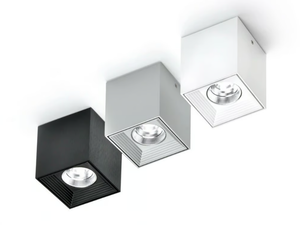
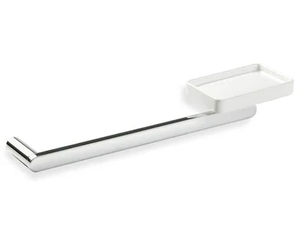
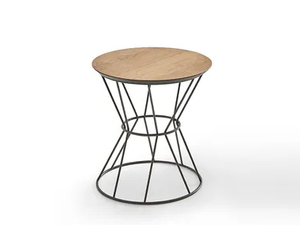
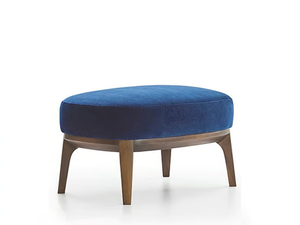

Pouf • MARZORATI

Marzorati > Pouf
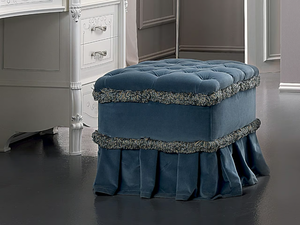
Small, large, square, circular: the pouf enriches the furnishing style of the living area with games of shapes, colours and materials. The pouf can be combined with other accessories in your home, creating continuity in the furnishing style, or it can be contextualized in such a way as to compose chromatic and material contrasts with the design of sofas and armchairs. Modern poufs are colour spots that catch the eye and increasingly replace oversized seats. From models covered in fabric with patterns and textures with strong tones, to solid-colored products, the poufs are a space-saving solution that allows you to furnish a living area with small dimensions without sacrificing comfort.
Beyond By Jacob Hashimoto 003 Clutch
Maharam > Curtain
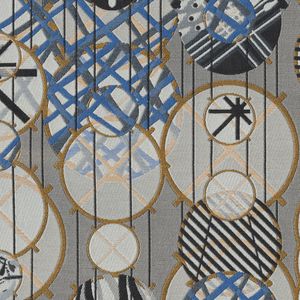
466637-001; Upholstery textile; Application: Seating; 69% Cotton, 18% Solution-Dyed Nylon, 13% Post-Consumer Recycled Polyester; 100,000 double rubs Wyzenbeek; Country of Origin: USA; Available as a made-to-order pillow
Porcelain Cool Blue Side Plate

Heal's > Furniture accessories
Light and refreshing, this contemporary range of tableware has been developed by Ist London exclusively for Heal’s. Since its launch in 2014, Ist London has continued to work with specialist Turkish craftsmen resulting is this deceptively light yet durable tableware. Renowned for its subtle blue colour and premium quality, the Cool Blue colour way is made from Limoges porcelain giving it a strength and durability that is only found in premium quality tableware.
Similar Furniture accessories for Commercial Interiors
Classic Oak 24844
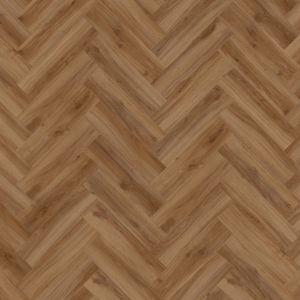
Moduleo > Furniture accessories
True classic. Majestic and bursting with rich colour accents. A true-to-life representation of the beauty and versatility of oak.
Add to Project
Create New Project
Your Projects
Loading projects...