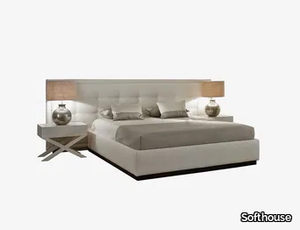
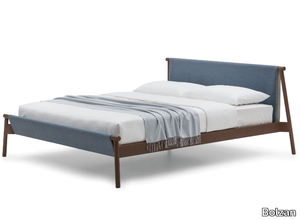
LEONE - Fabric double bed by Softhouse


Description
Specifications
| Material | Upholstered |
|---|---|
| Durability | Residential |
| Size | Queen |
| Brand | Softhouse |
| Category | Bed frame |
Frequently Asked Questions
What materials is the LEONE - Fabric double bed made from?
The LEONE - Fabric double bed is crafted from Upholstered. It is manufactured by Softhouse.
Is the LEONE - Fabric double bed suitable for commercial projects?
Yes, the LEONE - Fabric double bed by Softhouse is suitable for both residential and commercial interiors. It is commonly specified by interior designers and architects for hospitality, office, and retail environments.
More Bed frame by Softhouse






Recently Viewed Products
X HM10

&tradition > Chair
Showcasing an intriguing relationship between material and concept, the X lounge chair represents Hvidt & Mølgaard’s peak as furniture designers. After experimenting for years with the concept of a laminated wooden frame inspired by old wooden tennis rackets, Danish design duo Hvidt & Mølgaard released X in 1959, a lounge chair with a distinctive sloping silhouette and understated aesthetic.
Fly SC3

&tradition > Sofa
Space Copenhagen ́s Fly series signals a sculptural approach to design without sacrificing comfort. Referencing a classic Nordic aesthetic, details and techniques, seen in the slatted wood backrest, organic shapes and solid craftmanship. Fly is a series that allows the users to sit, lie, rest, and relax. Unlike many of the sofas and easy chairs in Scandinavian design history, Fly does not impose any particular posture onto the sitter. The seat itself is optimized for comfort, with loose cushions for the back that can be arranged according to the user’s own needs.
BM3670 Dining Table

Carl Hansen > Outdoor furniture
The BM3670 Dining Table was designed in the late 1960s by Danish furniture designer Børge Mogensen. A part of his Deck Chair Series, the simple, slatted lines and solid teak construction provide classic durable functionality in a range of outdoor spaces.
Butterfly

Zanotta > Side table
Small table. Bent plywood frame, veneered with natural, white or black painted oak. Top in tempered plate glass.
Trinidad
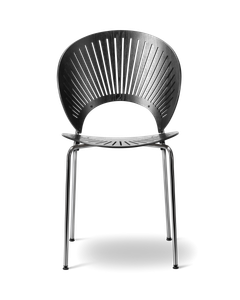
Fredericia > Chair
When designing the Trinidad Chair in 1993, Nanna Ditzel found inspiration in the elaborate fretwork from the Gingerbread Facades that she had seen in colonial architecture while travelling through Trinidad. Much like the facades, the cut-out fretwork of the chair triggers an interplay of light and shadows, creating a pattern projected into space and a subtle sense of motion.
D-Code Floorstanding bidet

Duravit > Urinal
White High Gloss, Tap hole platform: Yes, Overflow: Yes, Incl. mounting material Design by sieger design
Zero armchair
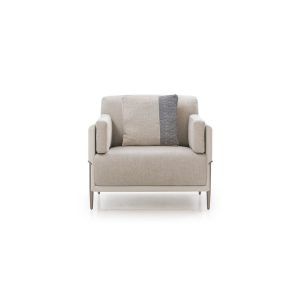
Turri > Armchair
The Zero armchair is built as a clean set of soft volumes, supported by a satin-finished metal structure in a platinum finish. The seat and back are made of extremely comfortable cushions covered in fabric. The outer shell of the armchair is covered in leather. The Zero armchair is available in different finishes as per sample book.
Cestita
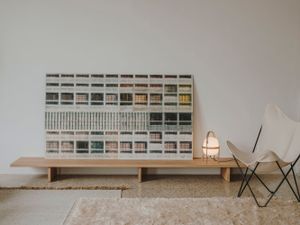
Santacole > Table lamp
The smaller version of the Cesta lamp is defined by a smaller wooden structure, always carefully polished and strongly assembled, holding the small opal glass globe in which its light is wrapped. This design, an object-lamp that creates spaces of pleasure wherever it is located, is one of its author’s most widely publicised international icons.
Gira
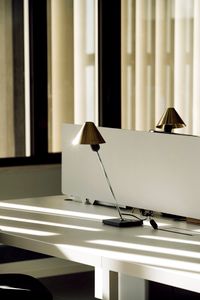
Santacole > Table lamp
The Gira lamp has all the simplicity and the profile of a classic. This lamp encapsulates all the essential elements, providing range of motion through its rotating arm and adjustable shade. Great for work, Gira is concentrated to give prominence to the light, creating desktop lighting spaces.
TMD
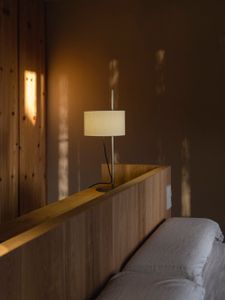
Santacole > Table lamp
With a structure supported by a circular metal base, the while linen shade of the TMD lamp looks like a sail hoisted on a mast. Whether switched on or off, the TMD manages to add warmth to the space around it. Another example of the timeless sobriety of Miguel Milá.
Skift Bar

David Design > Stool
Skift Bar – a barstool in a compact design. Seat and backrest are separate, which gives freedom to choose materials. The distance between seat and backrest provides an open design and practical cleaning. All upholstered details have a frame made of environmentally friendly molded wood, which provides a long service life. Metal base, with slades.
Mell

Cor > Side table
Like the sofa, the Mell table also appears to float. This is due to the delicate steel skids, just twelve millimeters thick. A closer look reveals that they have rounded corners - a detail which underlines the table's class. Combined with the Mell seat elements, seating landscapes emerge which will always be glad to accommodate guests.
Pilotis

Cor > Sofa
Sitting in state: not here. Pilotis wants to be lived in. This is the reason for the deep seat and reclining elements – sloping or straight – which are more than open to a playful combination with tables and shelves. But the new petite variant for small apartments and small rooms also makes a big impact.
Jalis

Cor > Chair
Cushions are archetypal pieces of seating furniture, especially in Arab countries. With Jalis, they are raised to a European seating level and transformed into chairs. What looks like a cushion with a kink in it is in fact a complexly upholstered, stably built item of seating furniture relative of the eponymous Orient-inspired upholstered Jalis sofa. A pleasing contrast is provided by the seemingly delicate base construction.
Cromatica Bianco

Florim > Wall Paint
A lexicon of colour shades for mixing. A large size and its submultiples. «This work represents a reflection on colour, and above all a proposal on how to transfer the multiplicity of shades typical of a hand-crafted piece into a project produced on a large scale.» Andrea Trimarchi & Simone Farresin Studio Formafantasma base their work in the design world on a strong vocation for research. Simone Farresin and Andrea Trimarchi view every project as an opportunity for study and the acquisition of new knowledge, and their love of speculation establishes a dialectic rapport with the situations offered by each new client. Whether it involves a material, a type or a production method, the first phase of their design process is the mapping of what the specific case places at their disposal. With Cedit, an analysis of the company's past and present was central to the inputs. Inevitably, since "Looking back to look forward" has been the design duo's mission statement for years. In this case, in particular, the company's history was a real treasure trove, a fine blend of memory and technology: on the one hand, the excellence of production technologies now extended with the added potential arising from the engineering of large-sized ceramic tiles, and on the other a wealth of experience build up with great designers of the past, from Zanuso to Noorda, through to <strong>Ettore Sottsass</strong>. Andrea and Simone decided to focus on Sottsass - who started designing for Cedit back in the late Seventies - and made an in-depth study of one of the colour charts he developed towards the end of the Nineties. A spread of colours which gave its name to the "41 Colors" collection, included in the catalogue of the period as a real alphabet for what has proved to be a lasting design language. Colour was much more than just a compulsory step in the dialogue between designer and producer, since Sottsass had already discovered the power of the mystery intrinsic to this universe of invention.<br /><br />With Cedit the master-designer, a long-established lover of ceramics and their crafted unpredictability, found a way of transferring his personal feeling for colour to a wide audience, through industrial mass production. And this assumption is another factor Formafantasma have inherited, interpreting it today with new, even more efficient technical resources just as capable of expressing the secrets of colour. «The concept of colour "in isolation" - Sottsass explained in a 1992 text - classified colour, Pantone, as they call it now, "scientific" colour, is something I still refuse to accept. (...) Colours, the idea of colour, are always intangible, they slip slowly away like words, that run through your fingers, like poetry, which you can never keep hold of, like a good story.» And Formafantasma seem to have chosen that distinction between colour "in isolation" and "intangible" yet ever-present colour as the basis of their work. However, their approach draws on their unique vocation for research and the technical resources of the third millennium. «This work - they explain to us - is a reflection on colour, and above all on <strong>how to bring the multiplicity of shades typical of a hand-crafted piece into a large-scale project</strong>.» The designers look at large, monochrome slabs and turn to the engineers for details of their secrets, their processing stages, the phases in their production. They appreciate that the colour of ceramic material, its ineffable secret, can still be present in the series and large tile sizes in which Cedit leads the way. They understand that this is, in itself, an expressive power which does not need channelling into forms, motifs and signs. But above all, they treat the surface as a large canvas on which they spread pure colour, which tends to be uniform but in fact is never really a "scientific", totally monochrome hue: it is not a Pantone. And this is the source of the fundamental insight, which only children of the transition from the analogue to the digital era could achieve, the reward for those who draw on the past to look to the future.<br /><br />The designers cut the slab into lots of regular pieces, not necessarily of the same size. They restore its identity as a "tile", a familiar name with something ancient about it, but which stands for a module, a unit of measurement, a building block. There is nothing nostalgic about this - on the contrary, the vision is completely new, and the portions of slab created can be reassembled with no restrictions, breaking down the unity of the whole and reviving its essence starting from its structure. As the cards in the pack are shuffled, what emerges is not a figure or motif but the representation of colour itself and its physical nature. It is live matter, born from the meeting of vibrating forces, the mixing of ever-varying percentages of the basic ingredients. And Formafantasma present us with the corpuscular, fragmented essence of these small frames of space and crystallised time, which reveal the code and formula of their composition. So Cromatica is a collection made up of six colours which actually have an infinite number of declinations and compositional possibilities. It is a "discrete" combination in the mathematical sense of the term, capable of generating multiple, variable subsets. At the same time, each slab can be used in its entirety, leaving the impression of analogue continuity unchanged. But what really amazes is the comparison and dialogue between the two approaches: a stroke of genius, laying clear the mysterious appeal the artificial reproduction of colour has always held for mankind. Because, as Sottsass said, «colours are language, a powerful, magical, intangible, flexible, continuous material, in which existence is made manifest, the existence that lives in time and space».
MIXU - High stackable barstool
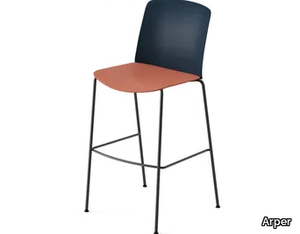
Arper > Stool
Mixu is an elegant stool crafted from chromed or powder-coated steel with four robust legs, offering both contemporary style and enduring durability. The stool's construction features a seat made of polypropylene, incorporating 80% recycled materials, complemented by a backrest available in five vibrant colors. Alternatively, Mixu can be configured with a seat crafted from plywood featuring a reconstituted oak finish (either natural or black), paired with a polypropylene backrest also in five color options. The design of Mixu is characterized by its sleek and minimalist aesthetic, allowing for an infinite range of customization possibilities through the combination of base, seat, and backrest finishes. The stool's height is precisely set at 75 cm, ensuring optimal comfort and functionality. Mixu embodies sustainability with its use of recycled materials in the polypropylene seat and FSC certified wood in the plywood option, reflecting a commitment to environmental responsibility. This versatile collection can be tailored to fit any setting or preference, whether for hospitality, contract applications, or personal spaces. The stool's design features softly rounded geometric curves that serve as an ideal canvas for material expression, allowing users to select from various color and texture combinations. Mixu is available in a variety of seat options including post-industrial recycled plastic, FSC certified wood, fabric, and leather finishes. Backrests can be selected in plastic, fabric, or leather, while the stool's four-legged base can be made either of metal or FSC certified wood. A stool variant with the same seat size as a chair offers additional comfort for hospitality or contract settings. Mixu’s design system is modular, enabling users to create unique and personalized pieces by combining different components. The stool can also be disassembled for correct disposal at the end of its lifecycle, ensuring that sustainability remains central throughout Mixu's entire existence. This thoughtful approach not only reduces waste but also minimizes carbon footprint during shipping and transportation. Mixu is a testament to design innovation, offering both practicality and aesthetic appeal in an environmentally conscious package. Its versatility ensures it can be seamlessly integrated into various settings, making it a versatile choice for designers, architects, and homeowners alike.

White Solid Indo Loop Cut Plain Rug

Abchome > Carpet
The White Solid Indo Loop Cut Plain Rug is a hand-knotted masterpiece from India. This 8'1" x 10'2" rug features a cream-colored, textured surface that exudes a natural and organic vibe. Made of high-quality wool, this piece evokes a sense of calm and neutrality with its simple yet elegant design.
Green Patchwork Wool Rug
Abchome > Carpet
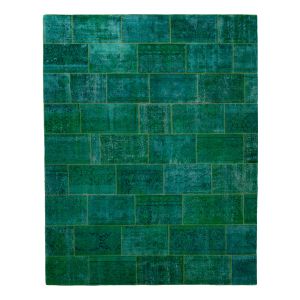
<!-- td {border: 1px solid #cccccc;}br {mso-data-placement:same-cell;} --> Deep pigments of green and teal cast a meditative shade over the intricate traditional design of this hand-knotted Color Reform Green Wool Rug - 9'11" x 12'2". Organically neutralized from its original color, this patchwork area rug was overdyed to produce a one-of-a-kind composition reborn through color.
Pure Loop Lounge

Infiniti Design > Armchair
Pure Loop Lounge is an armchair with a cozy and ergonomic shape, with a poluyrethane padded seat panel, and it’s completely upholstered. Functionality and comfort are guaranteed. The 4-star base is perfect for offices, lounges and waiting areas.
O'pera-K Soft
Papatya > Chair
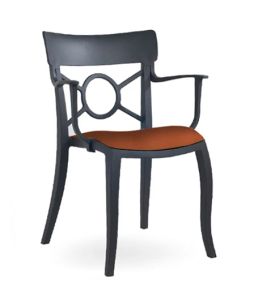
O'pera armchair with base in glassfibre reinforced polypropylene and the back in polycarbonate. This traditional chair turns into a contemporary looking chair with combination of the two material and with its fashionable colours make it easily adaptable to every dynamic design environments. Anti UV stabilized. Suitable for indoor and outdoor use. O'pera-K also available with rich selection of cushion models. It enriches the chair and gives a distinct character for the interior usages.
RETICOLO

Elica Studio > Styling
This whimsical ceramic piece combines the elegance of high heels with playful floral designs, creating a unique decorative object. Perfect for adding a touch of charm to a bedroom or dressing area.
SmartLayer

Steelcase > Office Chair
SmartLayer is the latest innovation from Vitrm, allowing you to choose between opaque or transparent windows at the push of a button.
More From the Collection
Similar Bed frame for Commercial Interiors
Box
Zanotta > Bed frame
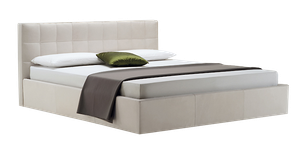
Beds with or without container unit. Steel frame. Suspension in bent beech strips with stiffness adjusters. Upholstered base and headboard in polyurethane/ heat-bound polyester fibre. Removable quilted cover in fabric or leather. The bed of the version 1874, fitted inside the base, is furnished with a container unit accessed by lifting the mattress with a special device. Upon request, only for the version 1875, the bed with adjustable corner supports that enable to place the springing at different heights and the bed size for 210 cm. long mattress can be supplied.
Grangala

Zanotta > Bed frame
Bed. Steel feet and shelf covered with cowhide pigmentato 90 in the same colour. Steel frame with suspension on natural bent beech strips. Base and headboard upholstered in polyurethane/heat-bound polyester fibre. Removable fabric or leather cover. Upon request the models with separate springing and the bed sizes for 210 cm. and 220 cm. long mattresses are available.
Talamo
Zanotta > Bed frame
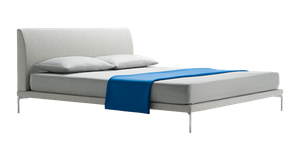
Beds. Polished or black painted aluminium alloy feet, or with natural or black nickel-satin finish. Steel frame with suspension in bent beech strips. Headboard upholstered with polyurethane/heat-bound polyester fibre. Removable fabric or leather cover. Upon request the bed sizes for 210 cm. and 220 cm. long mattresses are also available.

Yang Bed
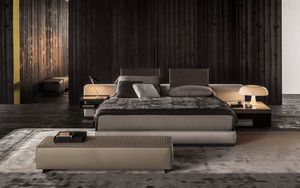
Minotti > Bed frame
The Yang Bed is a young, contemporary divan bed that evokes the unique play of proportions that distinguishes the eponymous seating system. The inherent design strengths and aesthetic features of the Yang seating system are embedded in the bed’s DNA. The headboard features generous, soft padding and reflects the distinguishing motif of the “Offset” elements, and projects out on both sides to form a single, unified profile designed to also accommodate the Close bedside tables. The headrest is an elegant and functional accessory that can be added to the headboard for optimum reading support and comfort. The base of the bed includes the modern cm 17 -high base with pocket springs that, along with the “Comfort H25” mattress, promises an extremely restful night’s sleep. The bed rests on simple, but elegant Pewter color metal blades.
Lawrence Bed

Minotti > Bed frame
The Lawrence Bed puts a contemporary spin on the classic upholstered bed, bringing back balanced proportions and adding the kind of constructive details that speak volumes about the company’s ability to deliver design and masterful craftsmanship. It is available with a one-piece padded headboard or with a padded headboard divided into two separate elements that come in two different heights and three widths, opening the door to creative freedom in designing symmetrical and asymmetrical configurations and making bold choices in upholstery combinations. The Lawrence Bed headboard upholstery is completely removable and features elegant stitching in a modern, graphic pattern of squares. The base of the bed is a box spring that, thanks to the vast number of pocketed springs, ensures optimal sleep quality.
Curtis
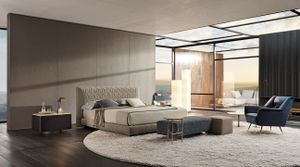
Minotti > Bed frame
The Curtis bed owes its original identity to the precious quilting. The exclusive pattern, a circle crossed by a vertical line, has been designed by Minotti Studio to characterize the walls of the settings of the 2018 collection. The workmanship conveys an effect of great softness to the fabrics and the leathers used for the upholstery. The pattern, simplified and reduced to the sole vertical line, is also the protagonist of the finishing of the sommier raised from the ground. Curtis is characterized by a tall and thin headboard, with an exposed zipper along the sides, and is available in one length only, with a choice of five widths. Interpreted with a crepuscular light, in a rarefied atmosphere, it suggests the encounter between the past of the Déco tradition, thanks to the rich quilting, and the present of interior decoration, with its sophisticated graphics. The Lawrence plaid, made of 100% cashmere wool, it comes in three coordinated color pairings: Écru and Ivory, Silver and Titanium; both with a suede border in mud color and Platinum.
Roger Bed
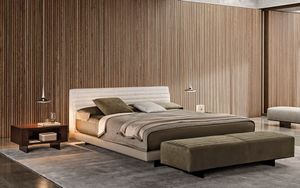
Minotti > Bed frame
With its minimal design and dynamic shape, the Roger Bed picks up the same concept as the Roger seating system, both in its airy look, and in the couture-style aesthetic of the headboard, quilted with sophisticated horizontal seams and trimmed with piping along the perimeter. Its versatility means it can be covered with all the fabrics and leather in the exclusive Minotti collection, making it the perfect addition to many different styles of night areas. The slender, suspended platform base is of sartorial design, covered in fabric or leather and decorated with sophisticated details and lapped seams: the leather bands of the structural base are sewn together using ribbons and crafted with the same technique used in the finest leather luggage-crafting. The bed, also proposed in the version with leather bedstead and fabric headboard, offers absolute comfort, thanks also to the diagonal slant of the headboard, reminiscent of the Roger seating system, which facilitates the correct reading posture. Raised 13 cm off the ground, it sits on bearing blades in extruded aluminium with a polished Black Coffee-coloured varnished finish, set back from the perimeter of the bed. Roger Bed is available in a choice of five widths and two heights for the heabdoard.
Aldgate
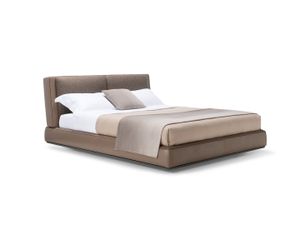
Molteni > Bed frame
Molteni&C broadens its range of beds with a sophisticated and elegant proposal by Rodolfo Dordoni. The cooperation with the Milanese designer has led to Aldgate a bed conceived as an island devoted to rest and relaxation.
Ovidio

Molteni > Bed frame
The Ovidio bed by Vincent Van Duysen is designed to be the centrepiece of the bedroom an extraordinary combination of sober elegance and utmost comfort where no detail is left to chance and the leading role is played by the headboard.
Add to Project
Create New Project
Your Projects
Loading projects...